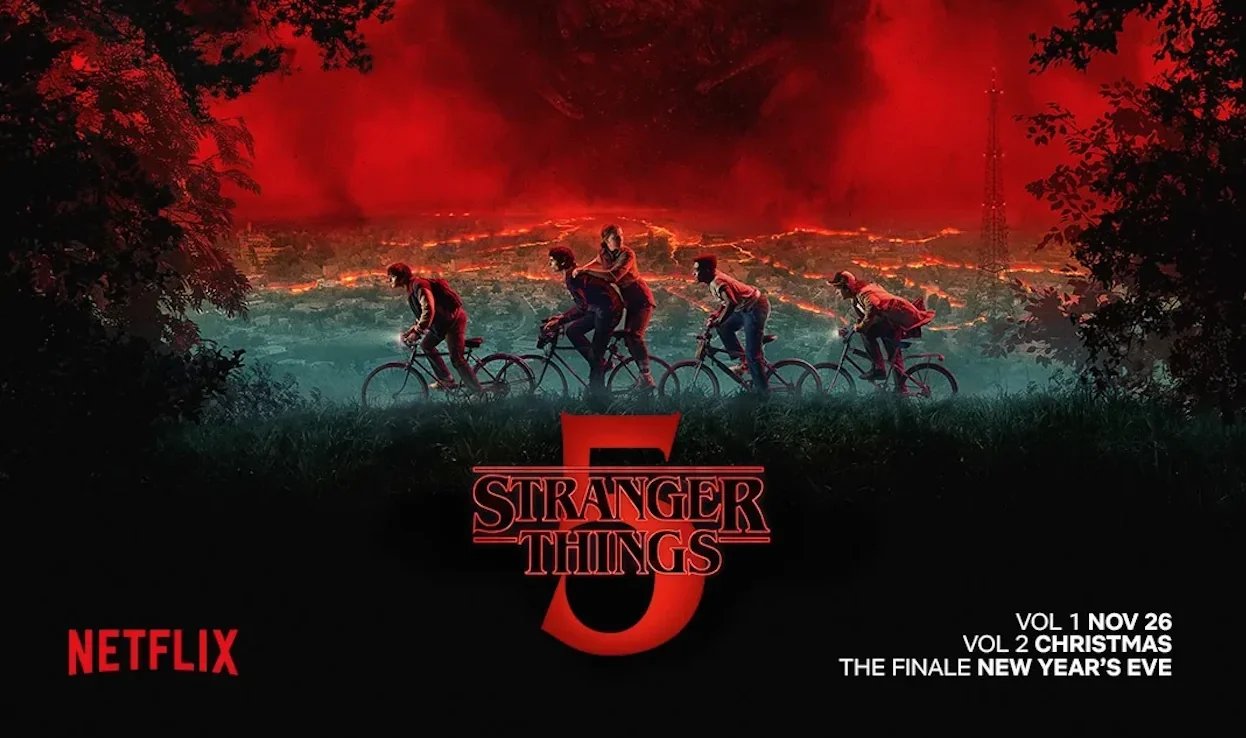
Stranger Things season 5 arrives carrying the weight of expectation, nostalgia, and a fanbase that has grown up alongside its characters. It also arrives bloated, self-conscious, and far less confident in its audience than the show once was. While the season does manage to land something close to a satisfying conclusion, it repeatedly trips over its own need to explain itself, to signal virtue, and to spell out emotional beats that earlier seasons trusted viewers to understand without being lectured.
The most frustrating element is the heavy-handed insertion of social messaging that adds little to the narrative itself. Stranger Things has always had subtext, particularly around outsiders, isolation, and identity. Earlier seasons handled this with subtlety and restraint. Season 5 abandons that approach almost entirely. Will’s needless coming out is the clearest example. By the time it happens, it feels less like a revelation and more like a box being ticked. The audience had already understood Will’s feelings as far back as season 2. His struggle did not need to be underlined with extended speeches and emotional signposting. Instead of deepening his character, the moment feels engineered to be discussed rather than felt.
More troubling is how this storyline rewrites the social reality of the 1980s. The show presents Will’s coming out as something met with near-universal understanding and emotional maturity, flattening a period that was anything but safe or accepting for gay people. This is not just implausible, it is historically dishonest. In the 1980s, being openly gay often meant real danger, abuse, and lifelong alienation. Many US states still had laws criminalising same-sex relationships until 2003. To gloss over that reality does not honour the past, and it does not honour those who lived through it. If anything, it diminishes the experiences of gay people who endured fear, rejection, and violence during that era by pretending those struggles were minor or easily resolved with a heartfelt conversation.
This problem extends beyond Will. Characters increasingly stop the story dead in order to explain their motivations, their fears, or the moral lesson of the episode. The monologuing becomes relentless. Conversations stretch far beyond what the scene requires, often reiterating information the audience already knows. Plot points are repeated multiple times, sometimes within the same episode, as if the writers no longer trust viewers to follow even the simplest thread without constant reminders. What once felt like sharp, natural dialogue now often sounds like a recap delivered by the characters themselves.
The pacing suffers badly as a result. Momentum is repeatedly drained by scenes that exist purely to restate the stakes or underline emotional beats that were already obvious. In earlier seasons, Stranger Things excelled at visual storytelling. A look, a silence, or a shared moment conveyed far more than pages of dialogue ever could. Season 5 replaces that confidence with exposition and reassurance, and the show is poorer for it.
Another baffling creative decision is the sudden elevation of Mike’s sister into a far more central role. While she has always existed on the edges of the story, season 5 abruptly positions her as a major player without the narrative groundwork to support it. Key decisions and emotional arcs are handed to her with little build-up, making her prominence feel artificial rather than earned. It plays like a late-stage rewrite rather than organic character development, further contributing to the sense that the writers were juggling priorities rather than following the story where it naturally led.
That is not to say season 5 is without strengths. The production values remain impressive, and the show still knows how to create atmosphere when it allows itself to breathe. Certain character pairings briefly recapture the chemistry that made the series so compelling in its early years. The final act, while shaky, largely avoids total collapse. The ending comes close to undermining itself several times, but ultimately pulls back just enough to deliver something recognisable as closure.
Even so, it is impossible to ignore how often the season flirts with self-sabotage. The emotional climax would have landed harder if the journey there had been leaner and more disciplined. Instead, the writers appear obsessed with making sure every theme is stated out loud and every character’s internal state is verbally confirmed. The result is a season that feels oddly insecure about its own legacy.
Stranger Things did not need to reinvent itself to justify its finale. Its strength was always in its characters, its sense of mystery, and its willingness to let silence and uncertainty do some of the work. Season 5 too often chooses explanation over implication and messaging over momentum. It does not completely ruin what came before, but it does dilute it.
In the end, season 5 closes the door without slamming it shut. There are moments worth remembering, but they are buried beneath excess dialogue, historical revisionism, and a lack of trust in the audience. Stranger Things finishes not with confidence, but with the lingering sense that it forgot what made people fall in love with it in the first place.