Indie authors and publishers need to adopt the indie game dev strategy
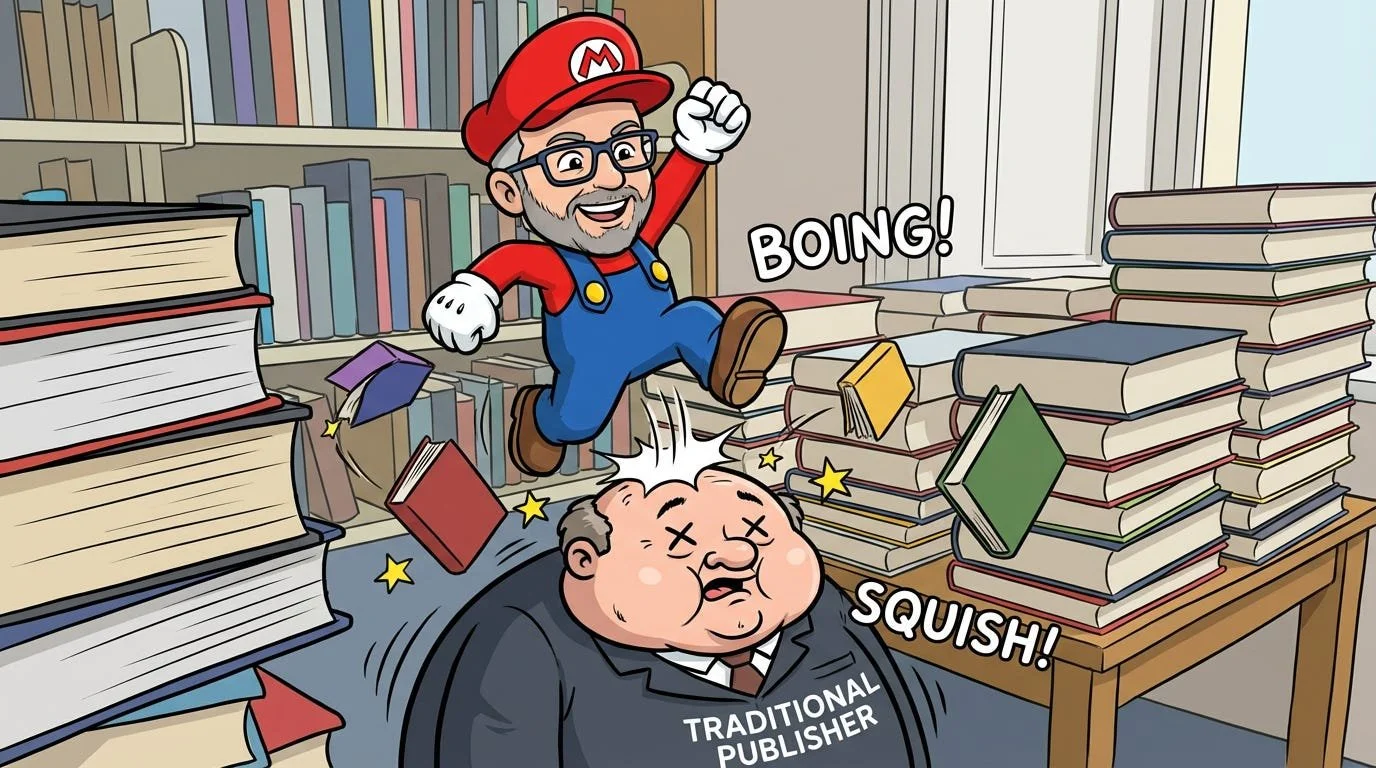
Over the past decade, something remarkable has happened in the games industry. Indie game developers, once dismissed as hobbyists or curiosities, are now routinely outperforming major studios. They ship faster, take bolder risks, build fiercely loyal audiences, and often generate higher returns relative to cost than the so called giants of the industry. Meanwhile, bloated AAA studios burn hundreds of millions on safe sequels, live service failures, and pander to wokeism.
It is a structural shift and it is one I think we indie authors and publishers urgently need to pay attention to.
The parallels between traditional publishing and traditional game studios are striking. Both are slow. Both are risk averse. Both are obsessed with scale, prestige, and gatekeeping. Both rely on a small number of big hits to subsidise a growing pile of failures. And both increasingly struggle to understand or serve their audiences.
Why are indie games are beating big studios?
Indie game developers did not win by trying to beat the big studios at their own game they focused on their strengths and are now putting trad devs to shame.
Big studios optimise for mass appeal and shareholder comfort. That means diluted corporate ideas, endless committees, and creative decisions driven by market research rather than passion or insight. Indie developers, by contrast, optimise for clarity of vision. One game. One audience. One clear promise. And at the heart of it all, like with us indie authors these people actually care and love what they do!
They also control their costs. (See my last post for more on that).
Indie games are scoped realistically, built by small passionate teams, and designed to be profitable without needing tens of millions of players. A modest hit can change a developer’s life. A moderate success is enough to fund the next project. Failure is survivable and often instructive.
Most importantly, indie developers build relationships, not just products. They talk directly to players. They share development progress publicly. They invite feedback early. They treat their audience as collaborators rather than consumers. When the game launches, it already has champions.
Big studios cannot do this. Their scale works against them. Their marketing talks at people, not with them. Their failures are catastrophic. Their successes are expected and quickly hollowed out by sequels, monetisation, and corporate pressure.
Sound familiar.
The same conditions exist in publishing
Traditional publishing operates under the same flawed assumptions as AAA gaming. Bigger advances. Bigger launches. Bigger visibility. Bigger prestige. All of it comes at the cost of agility, ownership, and long term sustainability.
Indie authors already have the tools indie game developers used to win. Direct distribution via our own websites, Amazon KDP, Kobo, Apple etc. Audience access via social media and forums. Rapid iteration. Niche focus. Full creative control. What many still lack is the strategic mindset to use those tools properly.
Too many indie authors still behave like rejected traditional authors rather than independent publishers. They chase validation instead of viability. They optimise for approval instead of profit. They cling to the idea that success only counts if it looks like traditional success.
Indie game developers shed that mindset years ago.
Lessons indie authors must take seriously
First, niche beats mass market. Indie games thrive by serving specific audiences exceptionally well. Indie authors should do the same. Write for readers who want exactly what you offer, not for an imagined mainstream that does not exist. For example there’s been a tonne of talk online saying that men no longer read. Wrong. Men have given up on trad publishers because all they do is pander to women. This is a huge opportunity for indie authors to fill that void, and some are having amazing success doing just that.
Second, scope realistically. Indie developers do not try to build the next global phenomenon on their first release. Indie authors should stop acting as if every book needs to justify its existence as a magnum opus. Ship smaller. Ship faster. Learn what works. Iterate.
Third, treat readers as a community, not a funnel. Indie games succeed because players feel invested. Indie authors who share progress, talk honestly about their work, and build direct relationships will always outperform those hiding behind ads and algorithms.
Fourth, own your IP and your data. Indie developers know exactly who their players are and how they found them. Indie authors who rely entirely on retailers and platforms surrender this advantage. Direct sales, mailing lists, and reader owned ecosystems matter.
Finally, accept that money matters. Indie game development is unapologetically commercial. It has to be. Romanticising poverty helps no one. Indie authors who want longevity must treat publishing as a business, not a charity for their creativity.
Replacing traditional publishing, not begging it
Indie games did not ask permission to exist. They did not wait to be validated by awards, critics, or institutions. They proved their value in the market and forced the industry to adapt around them.
Indie authors can do the same. Traditional publishing is not the gatekeeper of quality or culture. It is a distribution model that is increasingly outdated. Readers do not need it. Writers do not need it. The only thing keeping it dominant is habit and perception.
Waking readers up to this reality is part of the job. Indie authors are not the alternative anymore. They are the future. They just need to act like it.
The indie game revolution shows what happens when creators take control, respect their audience, and build sustainably. The publishing world is next.