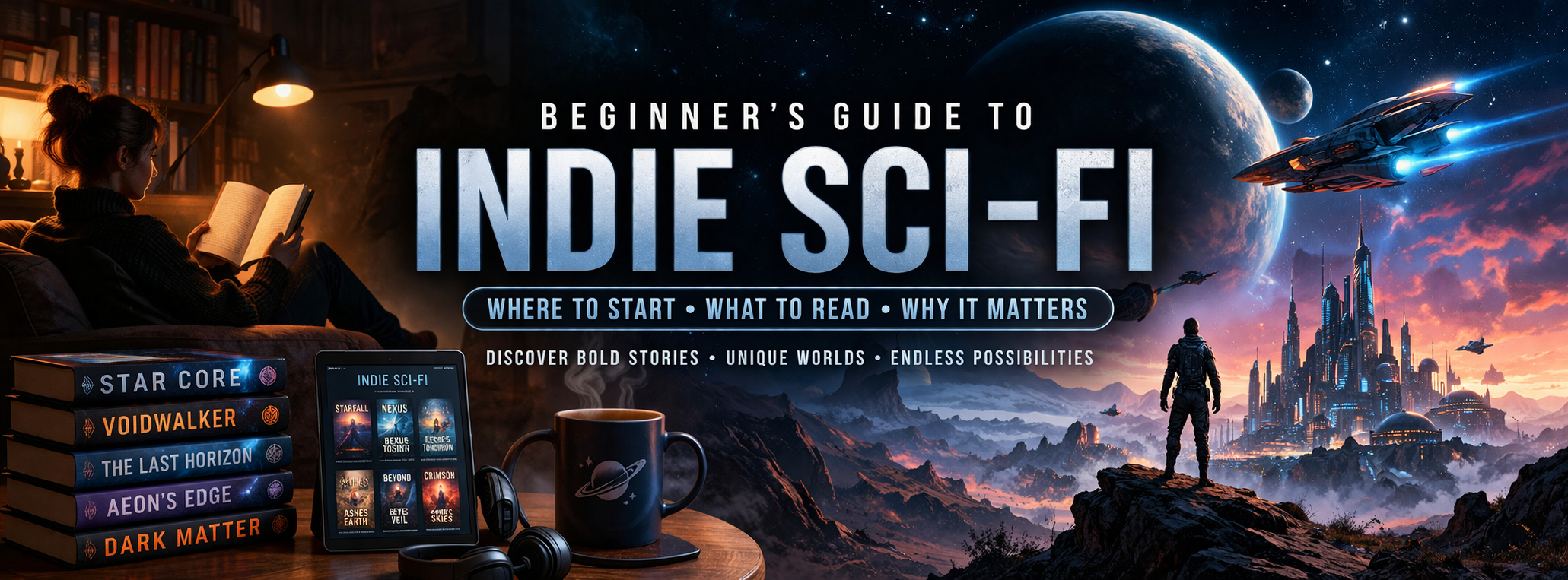
Getting into indie sci-fi can feel overwhelming at first. Unlike traditionally published books, where a handful of major titles dominate visibility, the indie space is vast, fast-moving, and highly fragmented. Thousands of new titles release every year across subgenres, tones, and styles. That variety is its greatest strength, but it also means new readers often don’t know where to begin.
The key is to stop thinking of indie sci-fi as one category and start treating it as an ecosystem.
The first step is identifying what kind of sci-fi you actually enjoy. Indie authors tend to write with a much sharper focus on niche audiences, so whether you’re into military sci-fi, space opera, cyberpunk, first contact, or AI-driven narratives, there will be entire clusters of books tailored to that interest. If you enjoy large-scale adventure with clear stakes and momentum, space opera is often the easiest entry point. If you prefer grounded realism and technical depth, hard sci-fi may be a better fit. The mistake many new readers make is sampling randomly rather than targeting their preferences.
Once you’ve identified your lane, series should be your priority. Indie sci-fi thrives on long-form storytelling. Authors build worlds over multiple books, and the real value comes from read-through rather than standalone experiences. A strong first book will hook you, but it’s the continuation that delivers the payoff. This is particularly important because many indie authors optimise their pricing around series entry. First books are often discounted or even free, making it easy to try without commitment.
Discovery is where most readers struggle, but there are a few reliable entry points. Platforms like Kindle Unlimited remain one of the most efficient ways to explore indie sci-fi at scale. For a fixed monthly cost, you can sample multiple series without upfront risk. Outside of that, newsletters and reader communities play a significant role. Many indie authors run their own mailing lists, offering free starter books or exclusive content in exchange for sign-ups. This creates a direct relationship between reader and writer, something that is far less common in traditional publishing.
Another effective strategy is to follow recommendation chains. When you find an author you like, look at who they collaborate with, who they mention, and which books are recommended to their audience. Indie sci-fi operates as a network, and readers often move through it via these connections. This is particularly useful because quality can vary, and curated pathways help filter the noise.
why indie sci-fi unlocks true creative freedom
One of the most compelling reasons to explore indie sci-fi is the level of creative freedom it gives authors, and by extension, readers. Without the constraints of traditional publishing, indie writers are not bound by market trends, editorial mandates, or risk-averse decision-making. That freedom fundamentally changes the type of stories being told.
In traditional publishing, sci-fi concepts are often filtered through commercial viability. Ideas that are too niche, too unconventional, or too difficult to categorise can struggle to get approval. Indie authors do not face those same barriers. They can take risks, blend genres, experiment with structure, and explore concepts that would otherwise be considered too speculative or too narrow for a mass audience.
This is where indie sci-fi becomes genuinely interesting. You will find stories that push boundaries, whether that is through unique alien perspectives, unconventional timelines, or worlds built on entirely new scientific premises. Authors are free to follow ideas to their logical conclusion, rather than reshaping them to fit a publishing mould. That often results in narratives that feel fresher, less predictable, and more aligned with the original vision behind them.
It also allows authors to respond quickly to emerging ideas. As technology evolves and cultural conversations shift, indie writers can incorporate those changes in real time. There is no multi-year delay between writing and release. This immediacy means indie sci-fi is often at the forefront of exploring new concepts, particularly around AI, space exploration, and future societies.
For readers, this translates into a more diverse and dynamic experience. Not every experiment will land, but when it does, it delivers something you are unlikely to find anywhere else. That unpredictability is part of the appeal. Indie sci-fi is not just about consuming stories, it is about discovering them.
It’s also worth adjusting expectations slightly. Indie sci-fi does not always have the same level of editorial polish or marketing budget as traditionally published work. However, what it offers in return is speed, creativity, and often a stronger connection to what readers actually want. Many indie authors are writing stories specifically designed to entertain, with tighter pacing and clearer hooks.
Ultimately, the best way to get started is simple: pick a subgenre, find a well-reviewed series, and commit to the first book. If it works, you’ve likely found not just a story, but an entire catalogue to explore.
That is where indie sci-fi excels. It doesn’t just give you one book. It gives you a gateway into a much larger universe.
Here’s some of our favourite Indie sci-fi to get you started-
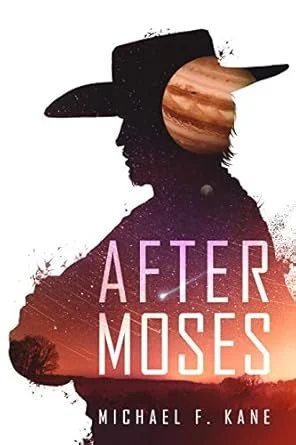
After Moses by Michael F. Kane
Orders of Magnitude by Yuval Kordov

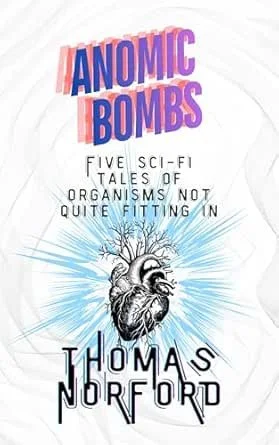
Anomic Bombs by Thomas Norford
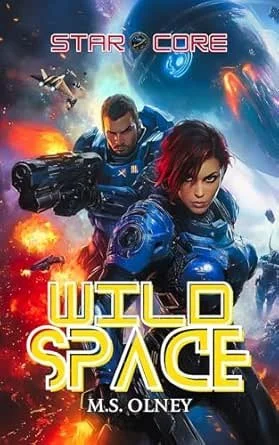
Star Core: Wild Space by M.S. Olney
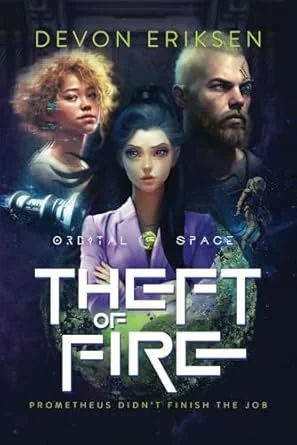
Theft of Fire by Devon Eriksen
For more excellent indie sci-fi books check out our Book Vault with over 200 books written by indie authors! Dive in and take a chance, you never know you might just find your new favourite.