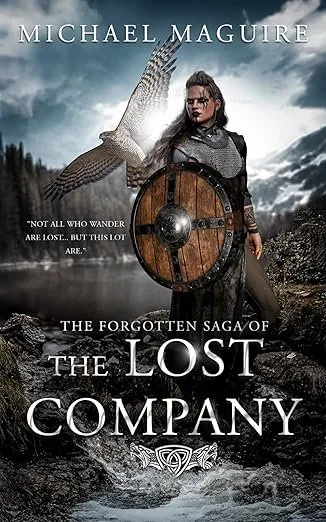
Military fantasy thrives on desperation, sacrifice and the bonds formed between soldiers who know every battle could be their last. That is exactly the kind of story you will find in The Lost Company by Michael Maguire. From its opening chapters, the novel throws readers into a brutal conflict and refuses to let the tension ease. What follows is a survival story shaped by exhaustion, fear, leadership and the grim reality of trying to stay alive when an entire empire wants you dead.
The novel centres around the remnants of a military company that barely survives a catastrophic battle against an invading empire. Cut off from support, carrying wounded comrades and lacking the supplies needed to survive for long, the survivors are forced into an impossible situation. Rather than retreating safely home, they find themselves hunted and driven deeper into hostile territory. Every decision becomes a gamble and every mile travelled feels costly. One of the strongest elements of the story is the constant sense that nobody is safe. The further the company travels, the more the pressure builds, forcing the reader to question just how many soldiers will have to die before any of them have a chance of seeing home again.
The world itself also adds an interesting layer to the narrative. Magic exists within the setting, but it is treated with suspicion and fear. It is both necessary and dangerous, something capable of helping the company survive while also making them targets. That uneasy relationship with magic gives the novel additional tension because the characters are never entirely comfortable with the tools they need to rely upon. It creates a setting that feels harsher and more grounded than many traditional fantasy worlds.
At the centre of the story is Sergeant Tuggs, a protagonist who is pushed into leadership whether he wants it or not. Tuggs is not portrayed as a flawless hero or legendary warrior. Instead, he feels like a tired soldier trying to keep his people alive in circumstances that grow worse by the day. That grounded approach to leadership works well because it makes the company’s struggles feel believable. Tuggs constantly has to balance survival, morale and discipline while dealing with enemy patrols, environmental dangers and tensions within the group itself. His journey from reluctant survivor to reluctant leader forms the emotional backbone of the novel.
The premise is strong and the overall plot kept me invested throughout. There is a gritty, relentless quality to the journey that suits military fantasy very well. The atmosphere of being hunted across hostile territory is one of the book’s biggest strengths and it keeps the story moving at a good pace. As a whole, I enjoyed the experience and was glad I picked the book up.
That said, the novel is not without flaws. Some plot developments were fairly predictable, which reduced the emotional impact of certain moments. A few of the character arcs also felt like they followed familiar paths and could perhaps have benefited from more nuanced execution. The foundations are solid, but there were points where the finer details did not always land as strongly as they could have.
Even with those criticisms, this is still an enjoyable military fantasy read that clearly had a great deal of effort and passion poured into it. As a fellow indie author, I can appreciate the work that goes into creating a story like this and there is plenty here for fantasy readers to enjoy. If you are looking for a fast-paced fantasy novel focused on soldiers, survival and hard choices made under pressure, The Lost Company is well worth checking out.