Book Review: Forgotten Allegiance by Tyler Tarter
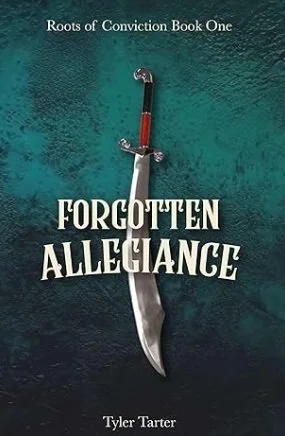
Forgotten Allegiance is an ambitious entry into the epic fantasy genre, evoking the scale and political complexity of Game of Thrones. The world Tyler Tarter builds feels expansive, with multiple nations manoeuvring for power while an external empire threatens the fragile peace between them.
It centres around the heirs of ten kingdoms who are thrust into power when an attack at the funeral of one of the kings throws the world into chaos. It reminded me a little of the Red Wedding. An innocent get together that led to mass regicide.
Bound together by only their shared friendship as children, they are forced to adapt quickly in a world where alliances are hastily thrown together to save their empires and keep their citizens safe.
The relationships between the heirs of these kingdoms form the heart of the story, and their shifting alliances and tensions are some of the book’s strongest elements. Tarter clearly has a talent for crafting political intrigue. The interplay between key characters is engaging, and the broader sense of a long game unfolding across multiple books adds weight to the narrative. The world itself is vividly imagined, with detailed settings and a clear sense of history behind the conflict.
That said, the opening chapters can feel overwhelming. A large number of characters, titles, and locations are introduced in quick succession, and without a map or glossary to reference, it can be difficult to keep track of who’s who. While this becomes easier as the central players emerge, new names and places continue to appear, which may challenge readers who prefer a more gradual introduction to complex worlds. This density, however, also reflects the scale of the story Tarter is aiming to tell.
There are also areas where tighter editing would strengthen the book. Occasional typos and repeated phrasing disrupt the flow, and some passages describe actions in a way that feels redundant. Dialogue at times leans heavily into exposition, with characters explaining or recapping events rather than letting them unfold naturally. Similarly, some descriptions spell out details that readers of the genre may already understand, which can slow the pacing. Addressing these issues would allow the novel’s stronger elements, namely its character dynamics and political intrigue to stand out more clearly.
Despite these issues, the novel shows clear promise. The characters are well drawn and generally likeable, and the political threads are compelling enough to suggest a strong overarching story as the series develops. I particularly enjoyed the concept of Empire heirlooms. Each heir receiving weapons of renown to aid them in their quests to restore the world. Readers who enjoy detailed worldbuilding, intricate politics, and a large cast of characters will likely find plenty to engage with here.