Book Review: Living in Times of Dragons (The Remnant King Book 1) by John A. Pretorius
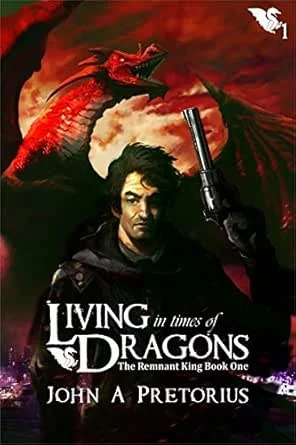
Living in Times of Dragons is an ambitious urban fantasy that leans heavily into both its mythic and grounded elements, reading at times like a fusion of high fantasy epic and crime thriller. It does not ease the reader in gently. Instead, it drops you into a world that feels familiar on the surface, then steadily peels that normality away to reveal something far older, darker, and far less controllable lurking beneath.
At the centre of the story is Roger Rommel, a man trying, and largely failing, to put his life back together. Relocated to a new country, carrying the weight of grief as a widower, and struggling to maintain any real connection with his adult son, Roger is already a character defined by tension before the fantastical elements even emerge. His profession only compounds this, placing him in situations where danger is routine rather than exceptional. This grounding is important, because when the extraordinary does arrive, it collides with a life that already feels close to breaking point.
And then the dragons come. Not symbolic, not distant, and certainly not tame. These are fully realised, dangerous creatures that do not conform to the more romanticised portrayals often found in the genre. Their presence shifts the tone of the novel immediately, turning what might have been a slow-burn character study into something far more volatile. The world expands rapidly, and with it, the scale of the threat.
Roger’s discovery that he can shape dreams and glimpse fragments of the future adds another layer of instability. It is not framed as a heroic gift, but rather as something intrusive and disorienting, blurring the line between what is real and what is possible. This ability ties him directly into a much larger narrative, one that suggests a hidden war has been unfolding beneath human civilisation for centuries. The deeper Roger is pulled into this conflict, the clearer it becomes that he is not just a bystander, but a central figure in a conspiracy with potentially catastrophic consequences.
One of the novel’s strongest elements is its handling of relationships, particularly between Roger and his son. Their dynamic feels authentic, shaped by loss, distance, and unspoken resentment. It provides an emotional anchor that prevents the story from drifting too far into spectacle. Even as the stakes escalate, this personal thread remains relevant and often grounds the narrative at key moments.
Stylistically, the book is solid, though not without flaws. There are occasional instances of clunky phrasing and minor editing oversights, which are not unusual for a debut. However, they rarely detract from the overall experience. The pacing is generally effective, balancing quieter character-driven scenes with bursts of action and revelation.
For readers who prefer their dragons to be fearsome rather than decorative, and their urban fantasy to carry genuine weight, Living in Times of Dragons delivers. It blends the sacred and the savage in a way that feels deliberate, offering a story that is both intimate in its character work and expansive in its ambition.