Book Review: The Scion Conspiracy
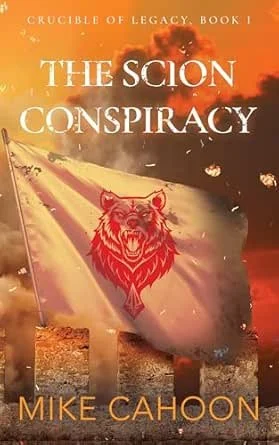
The Scion Conspiracy is one of those debuts that makes its intentions clear early. This is dark fantasy with teeth. Ambition, inheritance, power and manipulation sit at the heart of the story, wrapped in a world where magic is both a gift and a liability, and where authority rarely means safety.
Cahoon opens with a brutal, cinematic clash on a mountain peak as Prince Cassius Roth and his men fight wylerbeasts erupting from the dark like living nightmares. It is visceral, confident, and immediately grounding. The twist comes quickly. Victory earns celebration from the people, but not approval from Cassius’s father. Titles and purpose are stripped away, and from that moment the novel becomes less about heroic deeds and more about what happens when identity is taken from you.
That theme echoes through the parallel storylines. Jayce Acosta, a merchant’s son who can shape water into impossible forms, is quietly suffocating beneath expectation. His magic is not celebrated, only controlled. Juniper, an illusionist adored on stage, hides something far more dangerous behind ritual circles and whispered incantations. Cahoon’s strength lies in how these arcs mirror one another. Each character is pulled between obedience and selfhood, between safety and truth.
As the plot expands, conspiracies begin to bleed into one another. Holton’s raid on the fortress, the release of the Witch of the White Wood, and the figure summoned by a mysterious coin all point to a design far larger than any single player understands. Children vanish. Magic is used without consent. Power shifts in unseen ways. When Cassius is left broken and near death on a foreign shore, the story sheds any lingering illusion that thrones offer protection.
Where The Scion Conspiracy really succeeds is atmosphere. There is a constant sense that something is wrong, that the characters are always one step behind forces that are older, colder and far more patient than they are. Power is the true currency here, and no one is using it cleanly.
The world-building is dense and detailed. Cahoon clearly loves his settings, his magic systems, and the mechanics of his world. At times this leans toward heavy description, but the emotional pull of the characters usually carries you through. When revelations land, they feel earned. The identity of the Red Wolf, the truth behind Lawrence’s intentions, and the growing shape of the wider conspiracy all come together in a way that is deeply satisfying for a first book.
That said, the novel is not without weaknesses. The cast skews young, and while that works thematically, it occasionally slows momentum. There are moments where the characters circle the same discoveries without someone experienced enough to push events forward. Valeria hints at that missing presence, but never quite fills the role. Some characters, particularly Juniper, feel caught between being positioned as influential figures and being written with a level of naivety that undercuts their supposed authority. Cassius, despite his central role, sometimes feels less compelling than characters like Holton, who bring sharper agency and urgency whenever they appear.
Jayce’s arc could also benefit from more space. His transition from isolation to revelation happens quickly, and a slower burn would have strengthened the emotional weight of his choices.
Still, these issues do not outweigh the novel’s strengths. The emotional core is strong, the stakes are clear, and the sense of a much larger story waiting to unfold is unmistakable. Cahoon handles multiple points of view with confidence, and when the narrative focuses tightly on character, it shines.
The Scion Conspiracy is an ambitious, layered debut. It asks readers to sit with discomfort, uncertainty and moral ambiguity, and rewards patience with a world that feels alive and dangerous. For readers who enjoy dark fantasy driven by character, consequence and creeping dread rather than clean heroics, this is absolutely worth your time.