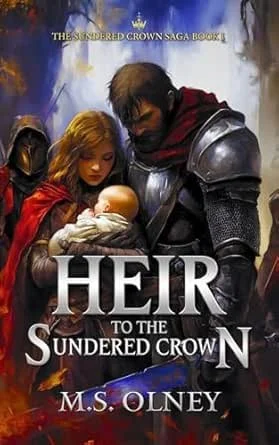
This is a re-review of Heir to the Sundered Crown now that the full Sundered Crown Saga is complete, and it feels like the right time to revisit where it all began. With the benefit of hindsight, what stands out most is just how confidently this opening instalment sets the tone for what becomes a full-scale heroic fantasy journey.
At its core, this is a heroic fantasy romp done right. The premise is straightforward in the best possible way. The Kingdom of Delfinnia is collapsing in on itself. The royal family has been assassinated, the great houses are tearing each other apart, and ambition has replaced loyalty. Amidst the chaos, a single surviving heir exists, hidden from those who would see the line extinguished for good.
It is a classic, well-worn foundation for a fantasy story, but that familiarity works in its favour. These kinds of narratives live or die on their characters and execution, and this is where the book finds its strength. Luxon, the young mage at the centre of the story, begins as uncertain and inexperienced, but there is a clear sense of trajectory from the outset. Knowing now where his journey ultimately leads across the full saga adds extra weight to his early struggles and decisions.
He is joined by a strong supporting cast that embodies the spirit of classic fantasy archetypes without feeling stale. A legendary monster-slayer, a relentless witch hunter, and a noble knight form the backbone of the group, each bringing their own perspective and purpose to the quest. Kaiden, in particular, stands out as a character who carries significant narrative weight, and his role becomes even more impactful when viewed in the context of the completed series.
What feels especially refreshing, both on a first read and now, is the story’s commitment to a more traditional moral framework. This is not a tale concerned with blurred lines or anti-heroes. Instead, it embraces clear stakes, defined heroes, and genuinely malevolent forces. In a landscape where darker, morally ambiguous fantasy often dominates, that clarity feels deliberate and, importantly, effective. It makes the story accessible, but never simplistic.
The world-building is solid and purposeful. Delfinnia feels like a kingdom in genuine decline, not just a backdrop for adventure. The sense of fragmentation, political tension, and looming threat is present throughout, giving context to the characters’ journey rather than simply serving as window dressing. The action sequences are well-paced and engaging, striking a balance between spectacle and readability.
From a technical standpoint, the prose is clean and easy to follow. It does not aim for complexity, but it does not need to. The clarity of the writing supports the momentum of the narrative, keeping the focus on the unfolding story and character development. There is a clear enthusiasm behind the storytelling that carries through every chapter.
For readers who enjoy classic quest-driven fantasy, or simply want a well-executed tale of magic, monsters, and destiny, this remains a strong recommendation.