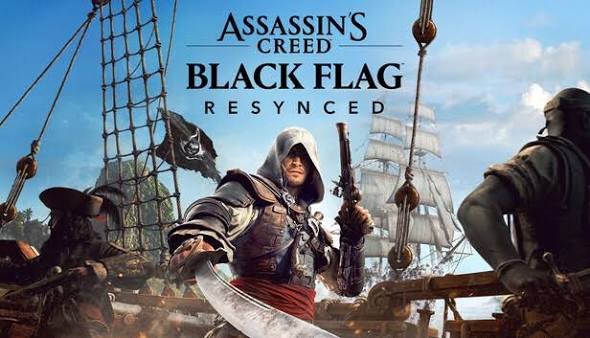
Assassin’s Creed IV: Black Flag Resynced is a strange remake. In some areas, it dramatically improves upon the original, while in others it feels like a clear step backwards. The result is a decent enough return to the Golden Age of Piracy, but one that never quite recaptures everything that made the original game so memorable.
The most obvious improvement is the graphics. The Caribbean looks spectacular, with vibrant islands, detailed settlements and some genuinely impressive lighting and weather effects. Sailing across open water remains one of the game’s greatest pleasures, and the improved visuals make exploration even more rewarding. Naval battles also look suitably dramatic, particularly when ships splinter apart beneath cannon fire.
There are some welcome changes to the story as well. Certain scenes have been expanded or adjusted in ways that improve the overall flow of Edward Kenway’s journey. The decision to remove the modern-day storyline is also a bonus. While some players may miss that broader Assassin’s Creed mythology, the original office sections frequently disrupted the pacing. Keeping the focus on Edward, the pirates and the Caribbean makes the narrative feel more consistent.
Unfortunately, not every change is an improvement.
The combat is noticeably worse than it was in the original. It feels slower, less responsive and far less satisfying. The original game was hardly the most challenging combat experience, but Edward moved with speed and precision. In Resynced, fights often feel clumsy, with less impactful counters and weaker finishing moves.
The animations have also been simplified. Many of the detailed movements and stylish executions from the original have either been shortened or removed. It may make the action appear smoother on the surface, but it also strips away much of the personality and brutality that made Edward such an entertaining character to control.
Edward himself is another problem. He has been made far too talkative, with additional dialogue inserted into scenes that originally benefited from silence or restraint. Some of his most important moments have been diminished because the new writing refuses to let the character’s expressions, actions or surroundings speak for themselves.
Edward worked because he was often guarded. His quieter moments revealed the guilt and uncertainty beneath his confidence. By giving him constant commentary and more overtly modern dialogue, the remake weakens that complexity. Several key scenes no longer carry the same emotional weight.
The newer writing is generally one of the remake’s weakest elements. It frequently sounds more contemporary than the original script and often lacks subtlety. Characters explain their feelings and motivations rather than allowing players to interpret them. It feels like writing designed to ensure nobody misses the point, even when the point was already perfectly clear.
There is also some unnecessary censorship. Certain flirtatious, suggestive or more provocative aspects of the original have been toned down. None of this fundamentally changes the story, but it contributes to the sense that the remake is uncomfortable with parts of its own source material. For a game about violent, drunken and morally dubious pirates, the selective sanitisation feels particularly odd.
Ultimately, Assassin’s Creed IV: Black Flag Resynced is a decent remake, but not a definitive one. The graphical improvements are excellent, the removal of the modern-day sections improves the pacing and some narrative alterations work well. However, the weaker combat, reduced animations, unnecessary censorship and inferior additional dialogue prevent it from replacing the original.
It looks better, but it does not always play, sound or feel better.
The original Black Flag remains the stronger experience in several important areas. Resynced is worth playing for those who want to revisit Edward Kenway’s adventure with modern visuals, but newcomers should not assume that newer automatically means better.
Verdict: 7/10
A visually impressive but uneven remake that improves the presentation while diminishing some of the original game’s character, combat and emotional impact.