An interview with IBOR creator Corey Ratliff
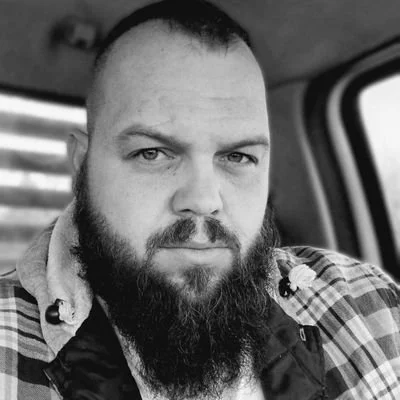
We sat down with IBOR founder Corey Ratliff and asked him some questions about the new indie book comeptition he’s created.
What was the moment you realised IBOR needed to exist?
I think the concept of IBOR came about in 2025. SPFBO became big enough that the lottery was needed. I missed the submission window in 2024, then I missed out in the lottery last year. High hopes and low expectations were my mindset for 2026. After all, SPFBO was only growing every year so my chances were probably less this year. I was frustrated. Last year, I said someone should put together another competition for those who simply didn't make it. This year, I made sure that happened. I don't think it has anything to do with fairness. It's all chance. And I wanted to give more people that chance to shine.
As an author yourself, what did SPFBO’s lottery year highlight for you about the current indie fantasy landscape?
Being an author myself, this competition shows me a few things. First, the indie fantasy landscape has changed in terms of quality. Sure, anyone can still technically write an unedited, poorly covered book and publish it. But the stigma behind “indie=bad” is slowly going away. Some of the best books, the most beautiful products, have come from the indie realm. Secondly, it has shown me there is a niche specifically for indies because the gates are wide open. Anything can be written and published. Nobody is gatekeeping to ensure trends and markets are being met before a story goes public. And lastly, it showed me there are good people that want to showcase and highlight indies.
What kind of books is IBOR really trying to champion?
The books that IBOR really wants to showcase are the ones written by authors who are carving their own path. The entire competition is a big spotlight for all contestants. That's the beauty of it—you don't have to win to potentially find a reader obsessed with your writing. We want indies to gain farther reach, intake more sales, and grow their network. But the book that wins won't just be the one that's cool. It won't necessarily be the one that's sold the most. IBOR's champions will be crowned based on 10 student categories. So the ones we really want to show are those. They'll be the authors who seek originality, the heart of being an indie. They'll be professional and their books will draw you in, and never even bring up the idea to the average reader that this book was self published.
What do you think gets lost when good books are filtered out by chance rather than quality?
I think the books that miss out on this competition, and really any type of filtering system, are often the ones that NEED to carve their own path. I’ve seen many authors give up and get disheartened by it. However, I think that generally means they leaned too heavily on the spotlighting opportunities. At the end of the competition, I still believe that the great quality books will rise through the ranks. There will be plenty that don’t even get the chance.
How has being an indie author shaped the way you’ve designed IBOR?
I don’t think, at least on the surface, that being an author myself has shaped the way I’ve designed IBOR. The biggest thing I struggle with is time, so I set the commitment bar rather low at 1 book per month per judge. And I can’t honestly say I’ve paid enough attention to every team that reads and reviews at SPFBO to know how they spotlight. I think I’ve set IBOR up to illuminate in the way that I’d want to see a competition expose these books. That means pushing them and shouting them again and again to catch as many readers as possible. We’re new and small, so our lantern is still a little dim. It’ll grow, though.
What does “success” look like for IBOR in its first year?
Success in IBOR’s first year, to me, looks like increased sales for these authors. Even the ones that won’t make it through the first round. If we do this right, we can get exposure to the smallest, most unknown book in the competition. On the topside, I’d like to see our winner branded a champion in their own right, increasing their sales, their networking, etc. Throughout the competition, we’ll invite interviews, reviews, blog posts and guest posts onto the site to push where we can. Ultimately, the goal is reach.
As both an organiser and an author, how have you approached designing IBOR to ensure fairness, trust, and transparency for everyone involved?
Being an author who doesn’t tediously follow other competitions, I can’t say that I’ve approached things differently. So I rely on my professionalism, which I tend to take more seriously than most things. And with that, I can mostly retain control of things, which means the rules I set are to ensure everyone gets that second chance they sought in SPFBO. We run randomized assignments for our books to the judges so there isn’t a bias in place that will skew the results. And the final round is set with a finite scoring system out of 1000 points.
What do you hope authors feel when they submit to IBOR, even if they don’t win?
I hope every author that submits to IBOR feels heard and seen. There is a large portion of authors who submitted to other competitions and didn't get in. If a book is written, published, and covered under our requirements for submission, they have a chance here.
If IBOR becomes a fixture in the indie fantasy calendar, what would you like it to represent five years from now?
I think and hope IBOR grows to a point that it becomes a staple as a second chance opportunity. And I believe firmly that we’ll see the champions rising in our competition that’ll shine as bright as other competitions. While the lottery system is fair, it isn’t guaranteed. It’s simple: a book that doesn’t get selected in a random drawing isn’t guaranteed to be the best. But even then, “best” is subjective to the readers, right? So, we will shoot for exposure and illumination on great books.
Finally, what would you say directly to an author who’s feeling disheartened after missing out on SPFBO this year?
Authors who missed out on SPFBO, I feel you. I missed out 3 years running. But IBOR is here to be a relief valve for you. A second chance to get eyes on your stories. To find your readers and fans.