Book Review: The Queen of Scorn by Christopher Brenning
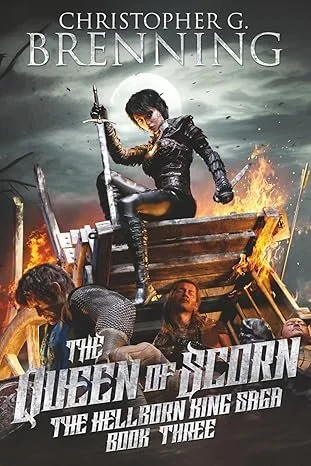
There’s a few authors I trust to write grimdark. Christopher Brenning is one of them.
I’ve extolled the fantastic work of this author before. The Hellborn King is a phenomenal work of dark military fantasy that is uncompromising in its depictions of violence and the effect it has on the men and women of its world. A visceral work of literature for those missing that touch of brutality that Game of Thrones provided.
The Queen of Scorn arrives two years after The Wrathbringer and occurs in the immediate aftermath of that book’s climactic battle between Gareth and the Bethanthian army vs Damien Dreadfire’s coalition of nordic-inspired viking-ish horde. So if you don’t want to know spoilers for the end of that book, tune out right now. This is Book 3, so you oughta be well acquainted with it if you’re reading this.
The Non-spoiler aspect? Queen of Scorn is a transitional book. It's a middle child, for good and bad. Brenning writes exceptional fights and battles with glee and hard-hitting emotional gut-punches, but for this book expectations need to be adjusted. Hellborn King and Wrathbringer are highly recommended by me first.
SPOILERS AHEAD
Wrathbringer’s climactic battle wasn’t the end for Damien and his horde. Their loss frayed the already precarious alliance of the northern horde, a collective of nordic-inspired barbarian tribes who all share a hatred of the powerful Betanthian kingdom. All, however, has not been well for the people. It's a kingdom united against multiple outward threats and splintering within.
The king is demented and sickly, hating anyone and everyone who comes within sight due to brain damage from an old battle wound. His son Gareth, the crown prince, spent the better part of two books getting his shit together, so to speak, while his sister Lucetta has been slowly losing hers at the same time. Their feckless younger brother is uninterested in politics, leaving Gareth to struggle against usurpers to the throne while Lucetta schemes to tear the kingdom down and rebuild it in her image with the help of a mysterious shadowy Woman in Black only she can see.
Gareth emerges into this book with the victory on the fields but a loss in the home. He married Madelyn, his lifelong crush, only for her to vacate the wedding bed in favor of revenge against Damien for atrocities committed against her at the end of Hellborn King. She spent much of Wrathbringer recovering and discovering new abilities as the fantasy part of this dark fantasy finally start to encroach on the narrative in a more meaningful way.
Queen of Scorn is largely relating to her and the bloody path of revenge Maddie takes throughout the course of the book–aiding by wraith-like powers from the gods as she vowed a one-woman jihad on Damien and his forces. Not without personal consequences, as the toll of three books of war start to tear at the fabric of her mind. She fights against constant self-doubts to reaffirm her personal mission, but the narrative goes a long way in showing her break down from perpetual war, perhaps even to her eternal detriment.
Meanwhile, Lucetta, the princess, is struggling to remain lucid and alive as she tries to maintain her standing as a royal head while she mentally and physically decays. I had to wonder at what point do the Betanthian soldiers start questioning why they follow the orders of an obviously addle-minded king and his clearly crazed daughter, but there are always machinations working against them, which drive Lucetta into a crazed stupor.
If you’ve watched the news lately watching woman scream into Tiktoks like wide-eyed raving lunatics, just imagine one of them as a princess trying to burn her home kingdom to the ground so she can rebuild a kingdom of her own on top of it. Its a perfect analogy for what’s happening to her in this book and no amount of torment to her feels like enough. The identity of who or what the woman in black is remains as elusive as she is in this book’s narrative, as she rarely shows up. This mystery has been something I and other readers have long wondered, but I’m not smart enough to put the pieces together as we go along. I hope in retrospect it will seem obvious but until then I’m left wondering.
The big question is what does Damien Dreadfire do after getting his ass handed to him and limping off injured? He goes on a quest to level up with dark powers that is one of the more notable instances of the series where it feels like everything changes forever. Its an interesting and great change, I just wish it had happened a bit sooner than so late in the book.
That’s the part I hate to write. Because of its nature as a transitional book building up the coming conflicts a lot of other characters in this narrative were either spinning their wheels or waited until near the end of the book to advance in a meaningful way. And I hate to say that, but the bad part of this book is that there’s a lot of building back up in the aftermath of the climax of Wrathbringer, meaning characters have to deal with what happened and find either their resolve to move forward or a different path altogether. So a good middle of the book felt like just that: spinning the wheels, waiting for traction. Some characters felt like they ended the book exactly where they started.
Titan spends much of the book chasing Maddie, Einaar spends much of the book keeping the peace of the northern horde while searching for a plot of his own, Sylvia tags along with Damien on his side quest to get some new weaponry to give himself an edge, and Gareth evades attempts to assassinate him while leading his troops. The final chapters do pay off in a big way, but it made the book a slow burn that at times felt too slow.
There were new POV characters that I struggled to connect with. Aleksius is a politician with a kingdom faction that was only mentioned before and spends his chapters hand-wringing over what to do about Betanthia. My least favorite character was Udorn, part of another faction of sea-faring viking raiders. My dislike coming from him and others being murdering plunderers who put women and children to the axe. Were it not for this aspect, I might have enjoyed the chapters because the action and warfare were good, but viking raiders aren’t exactly here for fun and giggles. Discerning readers may decide if they agree or not.
Brenning’s strengths lie in visceral battle scenes, hard-hitting combat and deep gut-punches of emotional impact. The book has plenty woven through a maze of political and personal intrigue that ends the book with the promise of a (hopeful) explosive collision of factions, forces, and warring powers that takes most of the book to set up. The pacing of the book did not so much help build tension as it did diffuse some of it as characters trudged to their next big plot waiting for them in the final chapters. There is enough happening at intervals to keep the book from feeling TOO slow burn, but by the end when the “Big Stuff” is happening, it's over quickly and I wondered why the book couldn’t be more like those exciting final chapters.
Even still, I’ll be there for Book 4, anxious to know what happens next now that so much went into the build-up for this that it promises to be one of the harder hitting narratives in the series. Brenning is a commanding author with a penchant for exciting violence and dark, heartfelt moments. A recommendation but with an adjustment of expectations.